


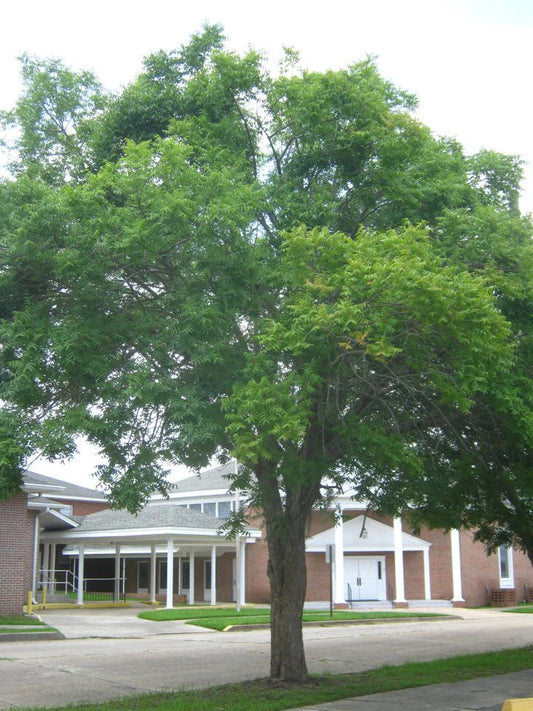
Pistache - Chinese
Regular price
$93.70
Sale price
$116.37
Planting and caring for your Chinese Pistache tree is a straightforward process that ensures it thrives in your garden. With just a few simple steps, you'll have a beautiful and resilient tree to enjoy.
Choose the Right Location: The Chinese Pistache tree thrives in full sun, so select a spot in your garden that receives plenty of sunlight throughout the day. It also requires plenty of space to grow, so make sure it has enough room to expand as it matures.
Prepare the Soil: The Chinese Pistache does best in well-drained soil. It prefers a loamy or sandy soil texture, but it is relatively adaptable. To improve drainage in clay-heavy soils, mix in organic matter such as compost or well-rotted manure.
Dig the Hole: Dig a hole that is at least twice the width of the tree's root ball and as deep as the root system. This allows for adequate root spread and ensures the tree will be planted at the correct depth. The top of the root system should be level with the surrounding soil surface.
Plant the Tree: Gently remove the tree from its pot and place it in the hole. Avoid disturbing the root ball too much. If the roots are circling around the root ball, gently tease them apart to encourage them to grow outward. Backfill the hole with the native soil and any leftover potting mix. Firm the soil around the base to remove any air pockets.
Water Thoroughly: After planting, give the tree a good watering to help settle the soil around the roots and provide moisture to support its initial growth. Make sure to water deeply, ensuring the moisture reaches the root zone.
Watering: Once established, the Chinese Pistache tree is fairly drought-tolerant. However, it's important to water it regularly, especially in the first few years after planting. Water deeply once a week during dry periods to encourage strong root growth. Make sure the soil is not constantly soggy, as this can lead to root rot.
Pruning: Prune your Chinese Pistache tree to maintain its shape and remove any dead or damaged branches. It's best to prune in late winter or early spring before new growth begins. This helps the tree maintain its structure and encourages new growth, making it more resilient to pests and diseases.
Fertilization: Fertilizing is not always necessary, but you can apply a balanced, slow-release fertilizer in early spring if your soil is poor in nutrients. Avoid using too much fertilizer, as this can lead to excessive foliage growth with little to no flowering.
The Chinese Pistache tree is a great addition to any landscape with its attractive foliage, vibrant autumn color, and adaptability. With proper care, it will thrive and add beauty to your garden for years to come.
Real reviews from real customers
Submitted Review2461
Submitted Review3291
Submitted Review4624
Submitted Review5212
Submitted Review1452
Here’s some of our most similar products people are buying. Click to discover trending style.
Don't forget! The products that you viewed. Add it to cart now.